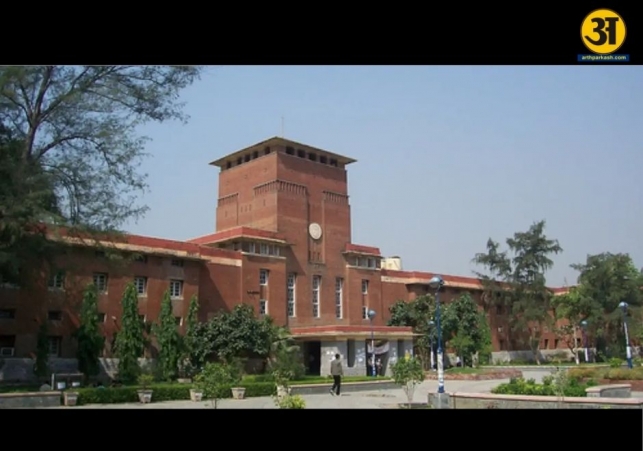
DU issues guidelines on entry-exit option in UG courses
Delhi University releases rules on multiple entry-exit system for undergraduate courses
- By Gurmehar --
- Friday, 12 Sep, 2025
The University of Delhi has released detailed guidelines for the Multiple Entry and Multiple Exit (ME-ME) Scheme, which will now apply to all undergraduate programmes. This move is part of the reforms under the National Education Policy (NEP) 2020 and is also aligned with the Undergraduate Curriculum Framework (UGCF) 2022.
The aim of the ME-ME scheme is to make higher education more flexible and student-friendly. Under this system, students can leave their course after completing a certain number of semesters and return later to continue from where they left off. This flexibility allows learners to balance personal, professional, or financial responsibilities without permanently losing their academic progress.
How the ME-ME scheme will work
According to the official notification, the scheme will work on an academic credit system. Each credit represents either one hour of classroom teaching or two hours of practical or fieldwork per week. On average, a student is expected to complete around 1,200 learning hours in a year. Credits will determine the type of qualification students receive, depending on when they exit.
Here are the exit options available:
-
After one year (Semester II): Students who earn 44 credits can exit with an Undergraduate Certificate.
-
After two years (Semester IV): Students with 88 credits will be eligible for an Undergraduate Diploma.
-
After three years (Semester VI): With 132 credits, students can receive a Bachelor’s Degree.
-
After four years (Semester VIII): On completing 176 credits, students will get a Bachelor’s Degree with Honours, Honours with Research, or Honours with Entrepreneurship, depending on their chosen academic path.
This system ensures that every year of study has value and provides students with recognised qualifications, even if they cannot complete the full four-year programme in one go.
Rules for re-entry and guidelines for students
One of the most important features of the ME-ME scheme is the option for re-entry. Students who exit can return to the same course and college within a maximum of seven years, as long as their previously earned credits remain valid.
The validity of credits depends on the level of qualification achieved at the time of exit. For example:
-
If a student exits after the first year, their credits will remain valid for up to three years. If they return within that time, they can rejoin in the second year and eventually complete the full four-year programme.
-
For those who exit after the second or third year, the validity period ranges between two and four years, depending on the qualification.
The notification also included detailed tables showing different re-entry possibilities. This flexibility allows students to return and complete their degree without starting over from the beginning.
In addition, the university has shared several important rules:
-
Students who wish to exit must apply in advance, preferably before the next academic session begins.
-
If a student exits in the middle of an academic session, their qualification will be awarded only for the last fully completed year.
-
Any disputes or issues regarding the interpretation of these rules will be settled by the Vice Chancellor, and his decision will be final.
-
A separate set of guidelines will later be issued for students seeking lateral entry from other universities.
These rules have been designed to ensure that the process remains clear, systematic, and fair to all students.
A student-friendly reform
The introduction of the ME-ME scheme reflects a larger effort to make higher education in India more student-centric. Many students face challenges during their academic journey, including financial problems, family responsibilities, or health-related issues. Until now, leaving a course midway often meant losing years of hard work. The new scheme ensures that the effort and credits earned are not wasted.
This initiative also supports career-oriented flexibility. For example, a student who leaves after two years with a diploma may begin working, gain professional experience, and later return to complete a full degree. Similarly, those pursuing research or entrepreneurship can design their study path in a way that fits their long-term goals.
Experts believe that the ME-ME system will encourage more students to join higher education by reducing the pressure of committing to an uninterrupted four-year programme. It also aligns Indian universities with international practices, where multiple entry and exit options are more common.
The scheme has also been designed to create a more holistic academic experience. By linking credits to classroom hours, fieldwork, and practicals, the university ensures that learning outcomes remain strong even if students exit with a certificate or diploma.
ALSO READ: France rocked by violent protests as political crisis meets public anger
Conclusion
The Multiple Entry and Multiple Exit scheme launched by Delhi University under NEP 2020 and UGCF 2022 is a step toward a more flexible and inclusive education system. By offering certificates, diplomas, and degrees at different stages, the scheme values every level of academic effort. With clear rules on re-entry and credit validity, students now have the chance to continue their education at their own pace.
For many young learners, this reform could prove life-changing, offering them both freedom and security in their academic journey. Delhi University’s move is expected to serve as a model for other universities across the country, making higher education more adaptable to the diverse needs of students.
Related News